The question comes up constantly from people buying their first mobility scooter. Three wheels or four? The honest answer is that both configurations work well for different people in different environments. Neither is universally better.
The right choice depends entirely on:
This guide breaks down the real differences so the decision becomes straightforward.
How They Compare at a Glance
|
Factor
|
3 Wheel Scooter
|
4 Wheel Scooter
|
|
Turning radius
|
Tighter — better for indoor navigation
|
Wider — needs more space to turn
|
|
Stability
|
Good on flat surfaces
|
More stable on uneven terrain
|
|
Outdoor performance
|
Suitable for smooth outdoor paths
|
Better on grass, gravel, and inclines
|
|
Footprint
|
Narrower — fits through tighter spaces
|
Wider — more presence on the ground
|
|
Portability
|
Generally lighter and more compact
|
Slightly heavier, but portable models available
|
|
Weight capacity
|
Varies by model
|
Varies by model — heavy duty options available
|
The 3 Wheel Mobility Scooter
Where It Performs Best
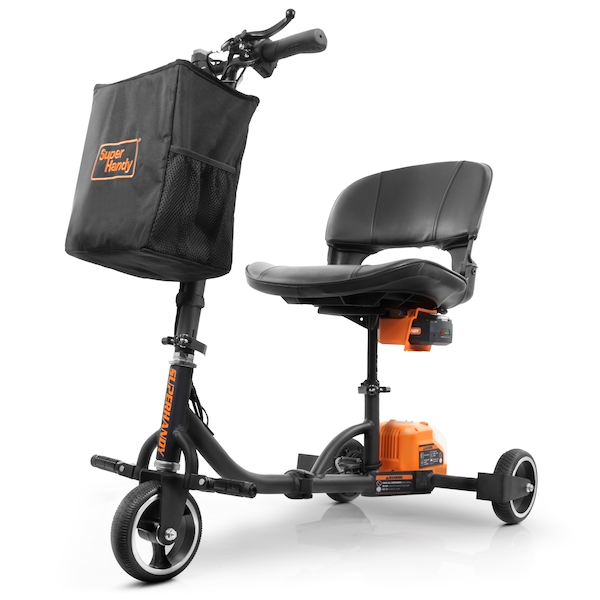
A 3 wheel mobility scooter has a single front wheel, allowing it to turn in a tighter arc than its 4-wheel counterpart. This makes it the natural choice for indoor environments where navigating around furniture, through doorways, and along narrow grocery store aisles requires real agility.
Shopping malls, medical offices, airport terminals, and smaller home layouts all suit the three-wheel configuration well. Users who spend most of their time on smooth, flat surfaces get full use of what makes this design practical.
Situations where a 3-wheel scooter works well:
-
Navigating indoor spaces with tight corners and doorways
-
Grocery shopping and retail environments
-
Flat outdoor pathways and pavements
-
Users who prioritize a compact, lighter scooter for regular transport
Portability and Storage
Three wheel models tend to be lighter than four-wheel equivalents at similar specifications. The SuperHandy Passport 48V/2Ah 3-Wheel Folding Mobility Scooter at Mobility Queens folds for convenient transport and storage. It is a practical feature for users who travel frequently or need to load the scooter into a vehicle regularly.
A portable mobility scooter in a three-wheel configuration suits users who need the scooter to work both at home and away from home without requiring significant assistance to transport it.
Something to Know
The single front wheel trades some lateral stability for manoeuvrability. On uneven outdoor terrain (grass, gravel, or significant inclines) a three-wheel design can feel less planted than a four-wheel model. This is not a safety concern on appropriate surfaces, but it is worth factoring in for users who spend significant time outdoors on varied ground.
The 4 Wheel Scooter
Where It Performs Best
A 4 wheel scooter distributes weight across four contact points rather than three. This gives it a more stable, planted feel on uneven surfaces, which matters for outdoor use on paths that are not perfectly smooth. Users who regularly navigate outdoor terrain consistently find four-wheel models more confidence-inspiring.
Situations where a 4-wheel scooter works well:
-
Outdoor use on varied terrain, including grass and gravel
-
Users who prioritize stability and confidence on the road
-
Longer outdoor journeys where a steady ride matters
-
Users with higher weight support requirements
The Vive Health Electric Powered 4-Wheel Mobility Scooter and the Lightweight Transportable 4-Wheel Mobility Scooter at Mobility Queens both offer the stability of a four-wheel design while remaining practical for everyday use.
Portability in a 4-Wheel Design
Four-wheel scooters carry a reputation for being bulkier than three-wheel models. Modern designs have addressed this significantly. The Lightweight Transportable 4-Wheel Mobility Scooter available at Mobility Queens has a foldable frame designed specifically for easy transport and vehicle loading, making it a genuine option for users who need a foldable electric scooter with four-wheel stability.
Something to Know
The wider wheelbase that provides outdoor stability also means a larger turning radius indoors. A four-wheel scooter needs more space to complete a full turn than a three-wheel equivalent. In smaller home environments or tight indoor spaces, this can require more planning around furniture and doorways.
Also read: How to Choose the Best Electric Wheelchair for Your Needs
The Folding and Portability Question
Both three-wheel and four-wheel configurations are available in foldable electric scooter designs. The folding mechanism matters for users who transport their scooters regularly. A scooter that folds quickly and loads easily into a car boot extends the user's independence considerably.
What to check when assessing portability:
-
Total weight of the scooter when folded
-
How quickly the folding mechanism operates
-
Folded dimensions against the vehicle boot it needs to fit into
-
Whether one person can manage the loading without assistance
A motorized scooter that folds but still weighs 70 lbs without assistance defeats the purpose for a user who loads it independently. Weight and ease of folding matter alongside the fold itself.
Choosing Based on Your Daily Routine
The most practical way to approach this decision is to map the scooter's configuration to the majority of where it will be used.
Choose a 3-wheel mobility scooter if:
-
Most use happens indoors or on smooth, flat surfaces
-
Tight spaces and narrow aisles are part of daily navigation
-
A lighter, more compact portable mobility scooter is a priority
-
The scooter will be transported and loaded into a vehicle regularly
Choose a 4-wheel scooter if:
-
Significant outdoor use on varied terrain is part of the routine
-
Stability and a planted ride feel matter more than tight turning
-
Longer outdoor journeys are planned regularly
-
A wider, more stable base gives the user more confidence
Both are reliable, practical mobility scooter options. The SuperHandy Passport and Vive Health 3-wheel models suit users who prioritize indoor agility and easy transport. The Vive Health and Lightweight Transportable 4-wheel models suit users who want outdoor stability without sacrificing portability.
Browse the full range of 3-wheel and 4-wheel mobility scooters at Mobility Queens to find the model that fits your specific routine.
FAQ’s
Which is better for indoor use: a 3-wheel or 4-wheel mobility scooter?
A 3-wheel mobility scooter is generally better for indoor use because it has a tighter turning radius, making it easier to navigate through doorways, furniture, and narrow aisles.
Are 4-wheel mobility scooters more stable outdoors?
Yes, 4-wheel mobility scooters provide better stability on uneven terrain such as grass, gravel, and inclines due to their wider wheelbase and four-point contact design.
Is a 3-wheel mobility scooter easier to transport?
In many cases, yes. 3-wheel scooters are typically lighter and more compact, making them easier to fold, store, and load into a vehicle for travel.
Can a 4-wheel mobility scooter still be portable and foldable?
Absolutely. Many modern 4-wheel mobility scooters are designed with foldable frames and transport-friendly features, offering both outdoor stability and portability.
How do I choose between a 3-wheel and 4-wheel mobility scooter?
The best choice depends on your daily routine. Choose a 3-wheel scooter if you mainly use it indoors or in tight spaces. Choose a 4-wheel scooter if you need better stability for outdoor use and uneven terrain.